Specifications
| INCI name | Hydroxyethylcellulose |
|---|---|
| Chemical name | 2-Hydroxyethyl cellulose ether |
| Synonyms | HEC, Hydroxyethyl Cellulose, Natrosol HHR, Nitrosol 250 HHR, Natrasol |
| CAS number | 9004-62-0 |
| Grade | Cosmetic |
| Appearance | White to off-white free-flowing powder |
| pH | 6.0 - 8.5 (1% solution) |
| Solubility | Soluble in cold and hot water; insoluble in most organic solvents |
| Typical use level | 0.2 - 2.0% |
| Packing | 25 kg bag |
| Minimum order | 25 kg |
| Origin | India / China |
| Shelf life | 24 months from date of manufacture |
Storage. Store in a cool, dry place. Keep bags sealed — the powder is hygroscopic and will lump if it picks up moisture.
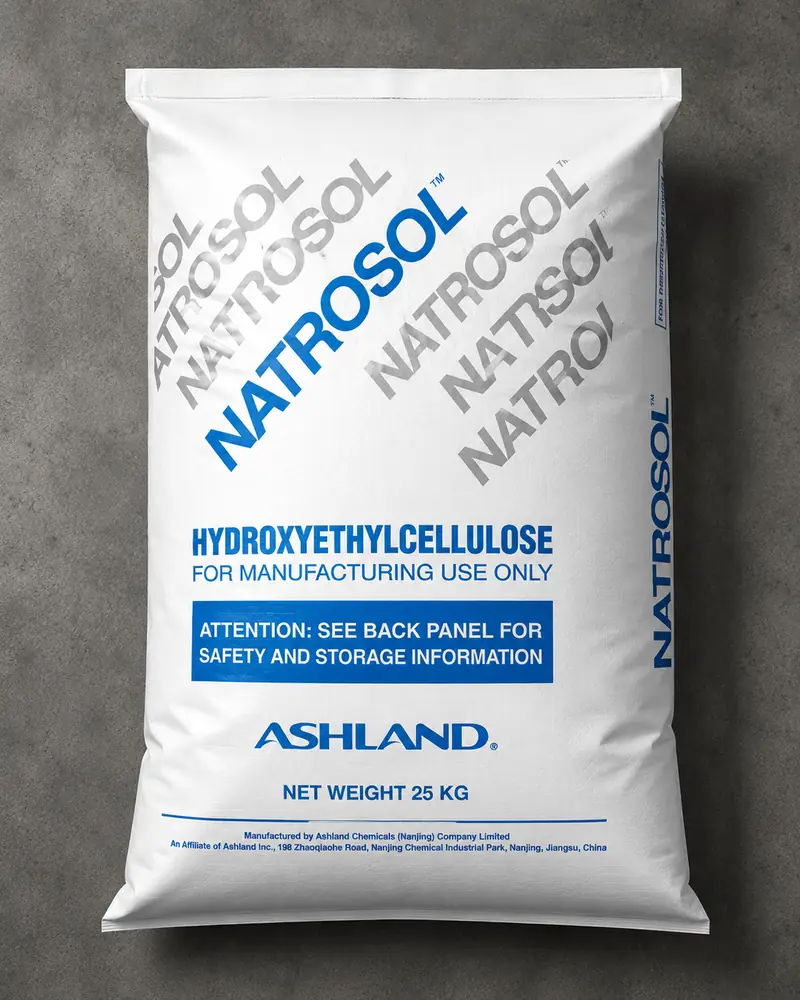
Natrosol is a registered trademark of Ashland. Product is supplied as sourced; the trade name is used to identify the grade only.
About this ingredient
Natrosol 250 HHR is the high-viscosity grade in the Natrosol range and is a non-ionic cellulose ether, which is what makes it useful where carbomers struggle. Unlike carbomer it needs no neutralisation and holds viscosity in the presence of salts and surfactants, so it is the standard choice for thickening shampoos and electrolyte-containing systems. Disperse it in cold water with good agitation before allowing it to hydrate.
Benefits
- High electrolyte tolerance — holds viscosity in salt systems
- Non-ionic, so compatible with cationic and anionic surfactants
- No neutralisation step required
- Effective at low use levels across a wide pH band
Applications
- Shampoos, body washes and surfactant systems
- Clear and pearlised gels
- Creams and lotions requiring salt tolerance
- Hand sanitiser and alcohol-containing gels
- Suspending systems for insoluble particles
Documentation
- Technical Data Sheet (TDS)Request
- Safety Data Sheet (SDS)Request
- Certificate of Analysis (COA)Download PDF
The COA is generated from our current product data and reports conformance against the standard specification — a batch-specific Certificate of Analysis carrying the measured values, batch number and dates is issued with each consignment. TDS and SDS are shared on request. More on how we document.
About Natrosol 250 HHR
Frequently asked
Not covered here? Send the question with your enquiry and we will answer it directly.
01 What is the difference between Natrosol HEC and Carbopol?
Carbomer builds clear high-viscosity gels but needs neutralisation and loses viscosity when electrolytes are present. Natrosol HEC needs no neutralisation, tolerates salts and surfactants, and works across a wide pH range. For shampoos and salt-containing systems, HEC is usually the right choice.
02 How do I avoid lumping when dispersing Natrosol?
Disperse the powder into cold water under good agitation before it starts to hydrate, or slurry it in a non-solvent such as glycerin or propylene glycol first. Adding it directly to warm water is the usual cause of fish-eyes.
03 What does the HHR grade mean?
The Natrosol grades differ by viscosity and surface treatment. HHR is a high-viscosity, delayed-hydration grade, which gives more time to disperse before thickening begins. Other viscosity grades are available on enquiry.